
간격 반복
기억하고 암기하는 데 도움을 줍니다 — 학습한 단어가 잊어버리기 직전에 다시 나타나, 배운 것이 실제로 자리 잡습니다.
Without review, most new vocabulary fades within days — Ebbinghaus measured it in 1885. Spaced review fixes that, but the tooling around it (building decks, syncing them with what you read, doing them daily) is where most learners give up.
In Bookverse there is no deck to build. The vocabulary, characters and dialogue lines you meet in a chapter are the review material.
In a session: rate yourself
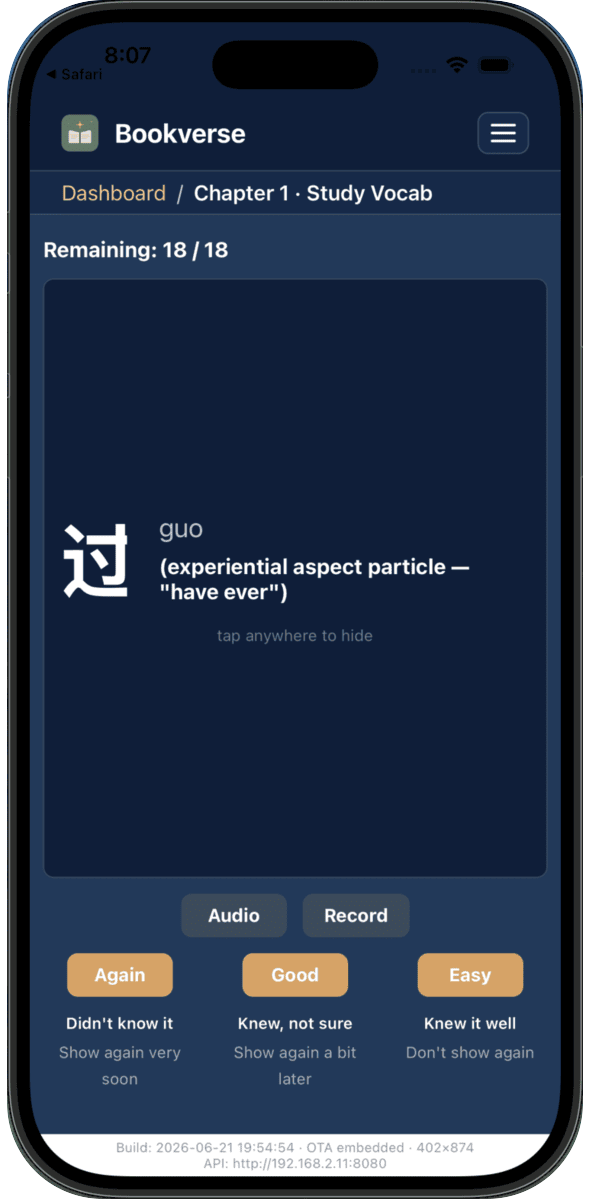
Vocabulary study works like a flashcard session. See the word, recall what you can, reveal the answer, rate yourself:
- Again — didn’t know it. The card comes back a few cards later in the same session, and keeps coming back until you know it.
- Good — knew it, not instantly. Two Goods and the card graduates from the session.
- Easy — knew it cold. The card leaves the session immediately.
There is no multiple choice. You judge whether you knew the word.
Across days: mastery takes passes
One session doesn’t make a word yours. Each section of a chapter needs multiple completed passes before it counts as mastered: vocabulary and characters take four, dialogues and lessons two. Until then the section stays in Today’s Study Items. Studying it again tomorrow is the plan, not a failure.
No deck to manage
Anki users know the trade: the scheduling is excellent, and the upkeep is real — card authoring, deck curation, daily backlog management. Bookverse makes the opposite trade. The deck builds itself from the course you’re already reading, review lives on the same dashboard as everything else, and your ratings follow your account across devices.
Background reading: why you forget what you study — the forgetting curve, SuperMemo, Anki, and where Bookverse fits.